
What Makes an Orchid an Orchid? Classroom Activity
Discover the flower structures that all orchids share and learn about their important functions.
Overview
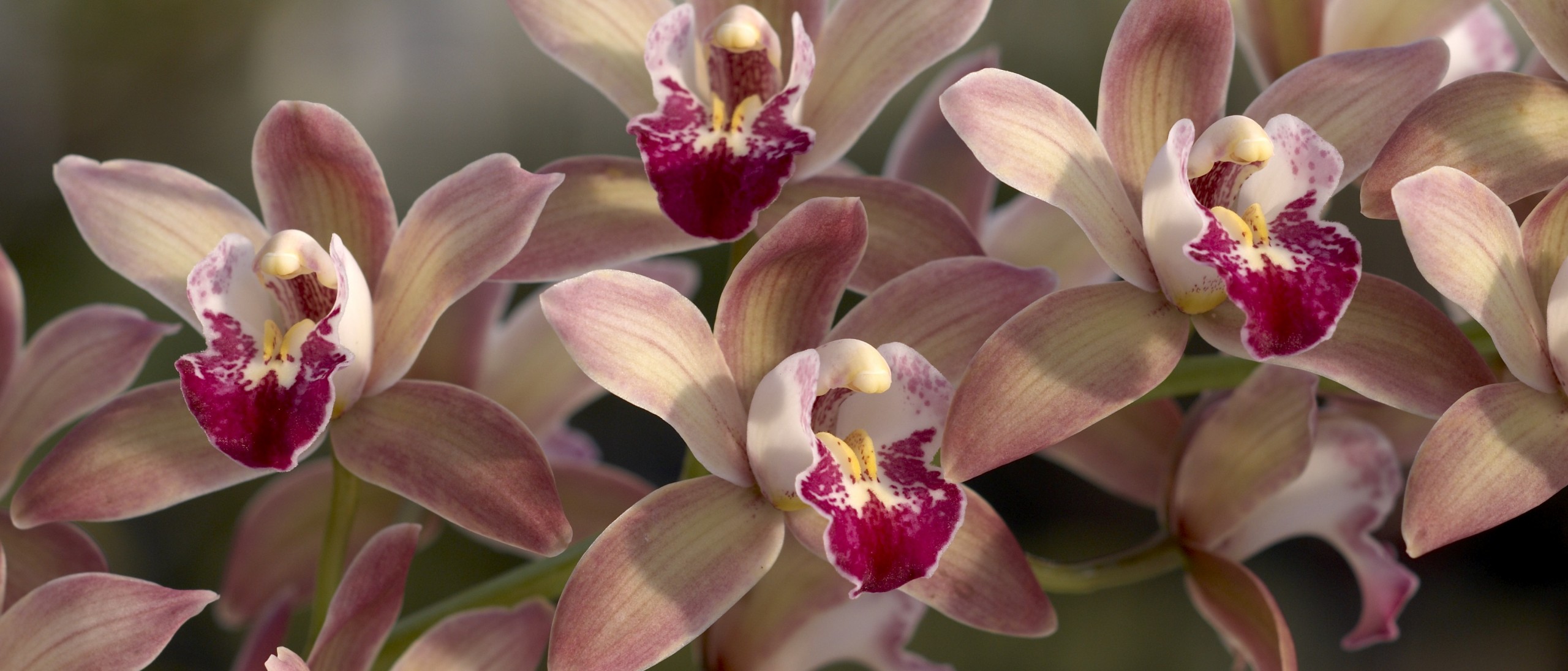
Orchidaceae (Or·chi·da·ce·ae) or, the orchid family of plants, offers excellent examples for studying plant structures, ecosystem interactions, heredity, and biological evolution. And while this plant family spans six continents with nearly 30,000 documented species offering a wide range of sizes, shapes, and colors, all orchids share some common traits.
In this lesson, students will
- discover what makes and orchid an orchid by comparing distinct species of orchids and identifying the flower structures they all share
- explore how orchids have evolved to attract pollinators, sometimes leading to highly specialized relationships
- consider the impact of humans on this plant family
Grades
6–8
Procedure
The teacher instructions for this activity are available as a PDF.
Materials
Compare and Contrast Organizer
Orchid Specimens and Pollinators
Standards of Learning
Next Generation Science Standards
Interdependent Relationships in Ecosystems
MS-LS2-2: Construct an explanation that predicts patterns of interactions among organisms across multiple ecosystems.
MS-LS2-5: Evaluate competing design solutions for maintaining biodiversity and ecosystem services.
Growth, Development, and Reproduction of Organisms
MS-LS1-4: Use argument based on empirical evidence and scientific reasoning to support an explanation for how characteristic animal behaviors and specialized plant structures affect the probability of successful reproduction.
MS-LS4-5 Gather and synthesize information about technologies that have changed the way humans influence the inheritance of desired traits in organisms.
Natural Selection and Adaptations
MS-LSA-4 Construct an explanation based on evidence that describes how genetic variations of a trait in a population increase some individuals’ probability of surviving and reproducing in a specific environment.
Topics and Skills
Orchids, Pollination, Structure and Function, Constructing Explanations, Obtaining, Evaluating, and Communicating Information